Starmer's Strategic Move: UK Middle East Jets Deployed for De-escalation and Citizen Safety
Amidst escalating tensions in the Middle East, Prime Minister Sir Keir Starmer has announced a significant bolstering of the UK's military presence, dispatching additional UK Middle East jets and helicopters to the region. This decisive move, spearheaded by Starmer's government, underscores a multi-faceted strategy focused on enhancing defensive capabilities, ensuring the safety of British citizens, and actively pursuing de-escalation in a volatile landscape. The deployment of advanced air assets signals a clear intent: to project stability and protect national interests without contributing to offensive actions.
The decision comes as the region grapples with heightened conflict, sparked by recent US and Israeli strikes on Iran and subsequent counter-attacks. Sir Keir Starmer emphasized that these deployments are a direct response to requests from regional allies for further assistance, reflecting a commitment to collective security. His primary concern, he stated, remains the "absolute priority" of British citizens' safety, a principle guiding every decision made during this critical period. This comprehensive approach combines military strength with diplomatic resolve, aiming to provide a calm and level-headed response in the national interest.
Bolstering Defensive Capabilities: Typhoon Jets and Wildcat Helicters
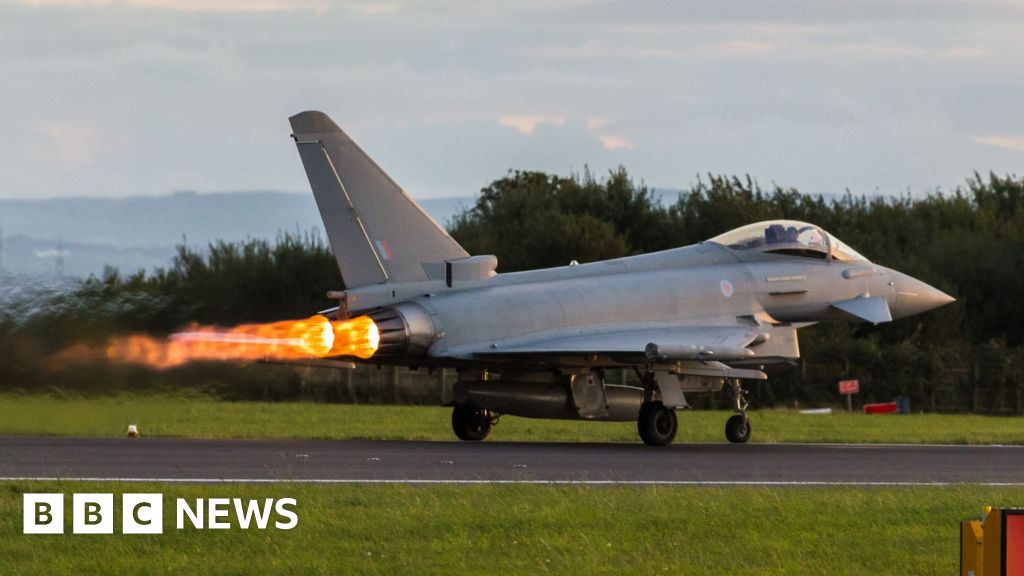
At the heart of the UK's reinforced posture are the advanced military assets being dispatched. Sir Keir Starmer confirmed that four additional Typhoon fighter jets are being sent to join an existing squadron in Qatar. These cutting-edge UK Middle East jets are renowned for their air superiority and multi-role capabilities, designed to strengthen defensive operations not only in Qatar but across the broader region. Their presence serves as a powerful deterrent and enhances the UK's capacity to protect its personnel, assets, and allies from potential aerial threats.
In addition to the Typhoons, two Wildcat helicopters, specifically equipped with anti-drone weapons, are being deployed to Cyprus. This strategic move is particularly pertinent given that an RAF base in Cyprus has already been targeted. The Wildcat helicopters offer crucial close air support and reconnaissance, with their anti-drone capabilities providing a vital layer of protection against the increasingly prevalent threat of unmanned aerial systems. Deploying these assets to Cyprus, home to RAF Akrotiri, a key operational hub, highlights the UK's proactive measures to secure its forward bases and personnel.
Defence Secretary John Healey affirmed that these British jets are actively flying as part of regional defensive operations. He underscored that "British jets are flying today as part of regional defensive operations in the Middle East to protect our people, our interests, and our allies." It is crucial to note that the UK has explicitly stated it played no role in the recent offensive strikes against Iran, emphasizing that its military actions are purely defensive. This distinction is vital, as the UK seeks to navigate the complex geopolitical landscape by reinforcing its defensive lines while advocating for de-escalation, ensuring its presence is one of protection rather than provocation.
Unwavering Commitment to British Citizen Safety and Evacuation Efforts
Beyond military reinforcement, a cornerstone of Sir Keir Starmer's strategy is the unwavering commitment to the safety and well-being of British citizens in the region. With over 140,000 British nationals having registered their presence in the Middle East, the scale of this humanitarian priority is immense. The government has swiftly mobilized resources to facilitate safe passage for those wishing to return to the UK.
- Charter Flights: The first evacuation charter flight from Oman successfully departed, signaling the commencement of dedicated repatriation efforts. Several more flights were scheduled to depart, demonstrating the government's determination to provide direct assistance.
- Commercial Flight Facilitation: In addition to charter services, thousands of individuals have already returned to the UK on commercial flights, particularly from the UAE, indicating robust support for various travel options.
- Rapid Deployment Teams: The Foreign Office has dispatched rapid deployment teams to key locations such as Oman and Saudi Arabia. These teams are on the ground to provide consular assistance, advice, and support to British citizens, helping them navigate complex travel logistics and regional uncertainties.
For British citizens currently in the Middle East, it is paramount to remain vigilant and informed. Practical advice includes:
- Register Your Presence: If you haven't already, register your presence with the Foreign, Commonwealth & Development Office (FCDO) online. This allows the FCDO to contact you with important updates and assistance.
- Monitor FCDO Travel Advice: Regularly check the FCDO's official travel advice for the specific country you are in. This provides the most up-to-date security assessments and guidance.
- Maintain Contact: Stay in touch with family and friends, and ensure they know your whereabouts and plans.
- Prepare for Contingencies: Have essential documents readily accessible and be aware of evacuation routes or emergency procedures in your area.
The presence of UK military assets, including the deployed UK Middle East jets and helicopters, indirectly supports these evacuation efforts by contributing to overall regional stability and ensuring the security of transport hubs and airspace, facilitating safer movement for civilians.
Navigating Geopolitical Complexities: De-escalation and Diplomatic Firmness
The UK's strategy in the Middle East is a delicate balance of military readiness, humanitarian action, and diplomatic engagement. Starmer has faced scrutiny, including from international figures like Donald Trump and domestic opposition, regarding the UK's approach to the conflict. However, he remains steadfast in his commitment to "calm, level-headed leadership in the national interest."
Crucially, the UK's position is one of non-participation in offensive strikes, even as it has permitted US forces to use UK bases – including RAF Akrotiri in Cyprus, RAF Fairford in Gloucestershire, and the Diego Garcia base – for "defensive" strikes. This distinction underscores the UK's commitment to supporting its allies' defensive actions while maintaining its independent stance on the broader conflict. The request from the US for base access, Starmer revealed, only came hours after their initial strikes, highlighting the reactive nature of the UK's decision to support defensive measures.
Starmer emphasized that "we are doing everything we can to de-escalate this," acknowledging that a long-term resolution will ultimately require negotiation on core issues, particularly Iran's nuclear capability. The UK has consistently maintained its position that Iran must not be allowed to develop nuclear weapons, a stance that Defence Secretary Healey reiterated, describing the Iranian regime as "abhorrent." This firm diplomatic position, coupled with military readiness, demonstrates the UK's dual strategy: to deter aggression through strength while actively pursuing diplomatic avenues to prevent further escalation.
The deployment of UK Middle East jets and helicopters is therefore not merely a show of force, but an integral part of a broader strategy aimed at fostering stability and protecting British interests in a dangerously unpredictable region. It reflects a nation standing firm by its values and principles, no matter the pressure to do otherwise.
In conclusion, Sir Keir Starmer's government has executed a comprehensive and strategically nuanced response to the escalating Middle East conflict. The deployment of additional UK Middle East jets and anti-drone helicopters signals a robust commitment to enhancing defensive capabilities and protecting vital interests. Simultaneously, a relentless focus on the safety and evacuation of British citizens underscores the humanitarian imperative at the heart of this strategy. Through a combination of military deterrence, humanitarian assistance, and unwavering diplomatic efforts towards de-escalation and nuclear non-proliferation, the UK aims to play a constructive role in navigating these treacherous geopolitical waters, providing stability and security in a region desperately needing both.